
It was late one Tuesday night last December when the sound finally got to me. In my small Asheville house, the only thing breaking the silence was the rhythmic, painful clicking of Banjo’s claws on the hardwood. He was pacing, circling his orthopedic bed, unable to find a position that didn't make his 9-year-old joints protest. As a freelance UX researcher, I’m trained to look for friction in a system, and watching my 50-pound shepherd mix struggle to simply lie down was the ultimate friction.
Before we dive into the receipts and the spreadsheets, I should give you a quick heads-up. Most of the brands for food, supplements, and telehealth you’ll see mentioned here are affiliate links. If you end up starting a subscription through one, I earn a commission at no extra cost to you. I’ve paid for every single one of these products with my own credit card, and either Banjo or my beagle rescue, Pickle, has tested them thoroughly. You can find the full transparency note on my About page.
That night, my researcher brain kicked into high gear. I opened the Google Sheet where I’ve been tracking Banjo’s health since his vet flagged those early kidney numbers back in 2022. I noticed a disturbing trend: even though his weight was stable and he was loving his JustFoodForDogs renal-friendly meals, his mobility score—a metric I track based on stairs and stiffness—was trending downward. It was time to look beyond just nutrition and get serious about supplements.
The Decision: Why Science Outweighed the Hype
I had experimented with generic CBD oils before, mostly for thunderstorm anxiety, but joint mobility in a senior dog is a different beast. It’s not just about relaxation; it’s about addressing the underlying inflammatory response. This led me to ElleVet Sciences. Unlike the sea of CBD products that look like they were designed by a lifestyle influencer, ElleVet felt more like a specialized tool. It reminded me of those high-end coffee clubs where you actually drink the bag because the roast profile is backed by chemistry, not just marketing.
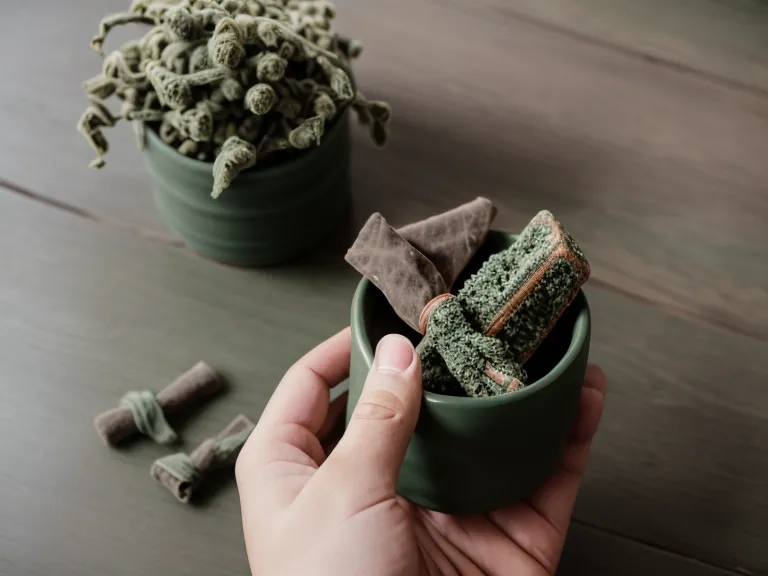
What caught my eye was their focus on CBDA. Most people know CBD, but CBDA is the acidic precursor, and research suggests it’s often more bioavailable in dogs for inflammatory responses. I dug into the data from a Cornell University study that showed an 80% success rate in dogs with joint issues using their specific formula. For someone who lives in spreadsheets, an 80% success rate is a hard number to ignore. If you're curious about how I integrate these kinds of data points into a broader care plan, you might find my notes on data-driven senior dog care helpful.
The product arrived in early December. The first thing I noticed was the smell—a distinct, heavy grassy scent of hemp oil that lingered on my fingertips. Banjo, who usually treats pills like a personal insult, actually tried to hide the first chew under his tongue before eventually deciding it was acceptable. It’s not a treat in the way a piece of freeze-dried liver is a treat; it’s medicine that smells like a farm, and you have to treat it as such.
The Liver-First Approach to Dosing
One thing that often gets glossed over in the world of pet supplements is pharmacokinetics—basically, how the body processes the stuff. Since Banjo has had some fluctuating liver and kidney numbers in the past, I couldn't just follow the back of the bag blindly. CBD is metabolized by the liver, which means if your dog has pre-existing conditions, you have to be more careful than the average owner. Standard dosing guidelines can sometimes fail here because you need to account for potential enzyme interactions.
I decided to stagger the doses. Instead of a large morning dose, I broke it up to ensure his system wasn't overwhelmed. This is where a pet telehealth subscription becomes a lifesaver. My local clinic in Asheville stopped doing same-week appointments months ago, so I used Maven Pet to consult with a vet who could look at Banjo’s history alongside the ElleVet specs. We discussed the specific clinical trial dosage level of 2 mg/kg, which is the gold standard for their joint support protocol.
For a dog in Banjo's 50-pound weight class, getting the dose right is a bit like rotating kids' lunchboxes—you have to be consistent but also observant of how they react to the "menu." If he seemed too lethargic, I’d pull back. If the clicking on the floor continued, I knew we hadn't hit the therapeutic threshold yet. It’s a delicate balance that requires more than just a passing interest in your dog's well-being; it requires a log.
The Learning Curve and the Beagle Incident
By late February, we were well into the routine, but not without a few hiccups. There was the morning Pickle, my 4-year-old beagle rescue, managed to intercept a dropped CBD chew that was meant for Banjo. Pickle doesn't have a single joint issue—she’s basically a spring-loaded vacuum cleaner—but she spent the entire afternoon napping in a sunbeam meant for Banjo, looking more relaxed than I’ve ever seen her. It was a reminder that even "natural" supplements are powerful tools that need to be managed carefully in a multi-dog household.

I also learned that CBD absorption is significantly more effective when administered with a fat-containing meal. I started adding a splash of salmon oil to his food when I gave him his chews. This felt like one of those small household hacks, like putting your vitamins next to the coffee maker so you actually remember to take them. If you’re already managing complex diets, like comparing JustFoodForDogs vs Ollie for weight management, adding a supplement routine is just one more column in the tracker.
I spent many nights staring at my spreadsheet at 1:00 AM, wondering if I was actually being a good dog parent or just a person obsessed with data points to avoid feeling helpless. It’s easy to get lost in the numbers—the milligrams, the weight tracking, the stool quality. But the data is just a proxy for the dog’s comfort. If the numbers look good but the dog is still pacing, the numbers don't matter.
The Turning Point: Six Weeks In
After about six weeks of consistent dosing and some adjustments made after sharing behavior videos with the telehealth team at Maven Pet, the pacing finally stopped. I realized through those video check-ins that I had actually been under-dosing him initially out of an abundance of caution for his liver. Once we aligned closer to that 2 mg/kg clinical target, the change was visible. For more on how I’ve navigated these vet shortages with digital tools, you can check out my tracking notes on senior health.
He wasn't just "not pacing"; he was moving with a fluidness I hadn't seen since the previous summer. In the world of senior dog care, you often celebrate the absence of pain rather than the presence of high energy. But for Banjo, the energy started to come back, too. He began waiting by the door for our walks again, rather than me having to coax him up from his bed with the promise of a high-value treat.

If you're looking for budget-friendly preventatives while you're spending more on premium supplements like ElleVet, I’ve found that Canada Pet Care or Best Vet Care can help offset the costs of the higher-end items. It’s all about where you choose to allocate the budget—I’d rather save on flea meds to afford the CBD that actually keeps him walking.
Mid-Summer Success at the River
The real test came one humid afternoon in July. We headed down to the French Broad River, a spot Banjo has loved for years but had been struggling to navigate because of the uneven, rocky banks. I had the folding ramp ready in the back of the SUV, just in case. But as we pulled into the parking lot, Banjo didn't wait. He stood up, shook himself off, and jumped out of the SUV without a second thought.
I felt a sudden tightness in my chest vanish. It’s a specific kind of relief—the kind that only comes when you realize a months-long experiment has actually paid off. He trotted toward the water, his gait steady, his tail held at that confident shepherd angle. He wasn't a puppy again, but he was a dog who wasn't being held back by his own body anymore. It confirmed that the best senior dog joint supplements aren't just about the ingredients; they're about the consistency and the willingness to adjust the plan based on what the dog is telling you.
Using ElleVet Sciences isn't a magic fix, and it’s certainly not the cheapest option on the shelf. It’s a commitment to a specific scientific approach that requires you to be as diligent with your tracking as the researchers were with their trials. For Banjo and me, that Sunday coffee habit now includes a quick update to the Google Sheet and a couple of grassy-smelling chews—a small price to pay for a dog who can still jump into the car for an afternoon at the river.