
When an older dog's numbers start drifting off normal, where do you actually step in first: at the food bowl, or by getting a professional to look at him sooner? I ask because I've got two dogs on two different clocks under one roof, a nine-year-old shepherd mix whose senior dog care now includes watching kidney markers, and a four-year-old beagle who mostly needs someone to notice when she's stolen food off the counter. Pet telehealth, a kidney health diet, behavior tracking: all three keep showing up in my life lately, and not always in the combination I expected.
Quick housekeeping before the comparison gets going: several of the links below are affiliate links, and if you sign up for a subscription through one, I get a small payment at no extra cost to you. I've paid for every one of these out of my own pocket first, and both dogs have been the actual test subjects, not just Banjo. None of that changes what I'm about to say about what worked and what didn't.
Here's where I've landed after paying for both routes long enough to compare them honestly. Fresh food and telehealth are not competing solutions to the same problem. One changes what's going into the bowl. The other changes how fast you find out something is wrong. Mixing up which one you actually need wastes money on the wrong fix and time on the wrong dog.
Food or Faster Eyes: Which Problem Are You Actually Solving?
Two very different failures taught me this the hard way. The first was assuming better food alone would fix a health question that food was never going to answer. The second was assuming a monitoring tool could replace a dietary change a vet had already flagged. Neither mistake was cheap, and neither one would have happened if I'd separated the two questions from the start instead of treating "senior dog health" as one blob of a problem.
The Fresh Food Case for a Kidney Health Diet
The trigger for the fresh food side of this was a vet visit that came with a $400 bill and a note about early chronic kidney disease markers on Banjo's bloodwork. I didn't wait around to fix it. First I tried a holistic kidney tincture from a pet boutique on Merrimon Avenue, something that smelled like licorice and that neither dog would touch no matter how I hid it in their food, so that money was gone before the real work even started. What actually moved things was switching Banjo onto JustFoodForDogs, specifically the line built for kidney and GI cases, which doesn't require a full prescription but still pays attention to the kind of ingredients that matter for a dog whose kidneys are already working harder than they should. I'll leave the biology to the vets; what I can say is that a kidney health diet is a real lever, not a marketing term, and it's worth asking your own vet which ingredients they want watched before you buy anything based on a label.
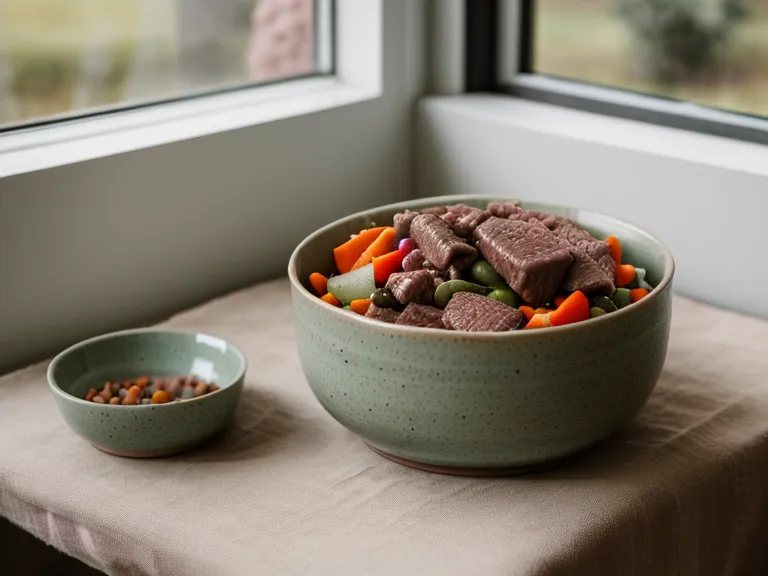
A friend of mine spends her weekends fermenting kombucha batches in her kitchen, fussing over her SCOBY like it's a third pet, and I think about her more than I'd like to admit when people ask how fast a dog can switch foods. You don't dump a new culture in and expect harmony by dinner, and a dog's gut needs a similar runway before it settles; rush it and you get a rough few days that has nothing to do with whether the new food is any good. My neighbor Dylan, two blocks over, was going through the same thing with his lab mix Biscuit around the same stretch I started Banjo on fresh food, and now he won't make a feeding call without first asking what my Google Sheet says about it, which I mostly find funny since his own tracking habit started right alongside mine. Between the two households we've tried enough formats, gently cooked, freeze-dried, fully fresh, to know the differences aren't just marketing. They change how much freezer space you need and how much you're willing to spend on shipping, and that's really a separate comparison from whether the ingredients themselves hold up.
Cost is the part people underestimate. A subscription's sticker price is never the real number; factor in the shipping cadence, the freezer space you might end up buying, and the food you toss when a delivery sits too long, and the true cost of feeding fresh runs higher than the homepage math suggests. The kibble bag we still keep around for backup sits open on the counter some nights, and there's a faint fish-meal smell drifting off it now that I've gotten used to the fresh stuff; it never used to register before, but it's the kind of thing you only notice once something better is sitting right next to it. For what it's worth, the payoff showed up somewhere unglamorous: these days, when I flip Banjo's lip back to brush his teeth, the gum underneath sits pink and firm against my thumb instead of the duller color it used to be. It's a small thing, but it's the kind of small thing you only catch if you're already looking closely.
Where Pet Telehealth Earns Its Subscription
Telehealth solves a completely different problem, and it earned its place in the budget on a week when Banjo's gait looked slightly off on our usual walk through Black Mountain Town Park trails, and every clinic in town was booked out past the point where waiting felt responsible. That's the exact gap Maven Pet filled. I log symptoms and behavior daily across both dogs, and it gives our vet something better to work from than a fuzzy memory of "he's been acting a little slow lately." The log itself is the same one behind every food switch too; I laid out the actual mechanics, the columns, the stool scoring, in my UX Tracking Method for Switching Dog Food. Deciding when a symptom is a same-week-telehealth situation versus a drop-everything-and-drive-in situation is its own judgment call, and I'd rather point toward what happens when local vets are booked out than try to compress that whole question into a paragraph here.

What telehealth doesn't do is hand you a prescription and set you loose on whatever online pharmacy shows up first in a search. Getting a script authorized properly still runs through a real pathway, and sorting out which online pharmacies are legitimate versus which ones are a gamble is its own research project, one I've done the legwork on elsewhere rather than winging it off a five-star rating. Telehealth also can't replace hands-on care for anything acute or anything that needs imaging, and I still drive in for those; no subscription changes that math.
What Behavior Tracking Won't Fix
Behavior tracking tells you something is changing. It does not tell you why, and that gap is where outside help beyond food and telehealth has come in. When Banjo's pacing at night got bad enough to show up as a pattern in the log instead of a one-off night, I looked at ElleVet Sciences, mostly because it's one of the few CBD brands I felt comfortable bringing up with our vet without getting a look for it. It's helped with the restlessness, though I'll leave the sleep science itself to people who've actually studied it rather than guessing at a mechanism. Dosing is its own decision on top of that. Whether you're using it for one bad thunderstorm night or as a daily habit changes the math completely, and it's a comparison I've written about in more depth for dogs who only need it now and then rather than every day.
Neither the food nor the CBD nor the telehealth log replaces the basics either. Whether it's confirming a recipe actually meets AAFCO standards for a complete diet, or catching a trend before it turns into a crisis, the goal is staying ahead of the next vet visit instead of reacting to it.
Picking Between Them
So here's the actual split, if you're standing where I was. Reach for a kidney health diet change when bloodwork or a vet visit flags something dietary and you have weeks, not days, to adjust and watch the trend. Reach for telehealth when the question is more urgent than a food switch can answer: gait that changed overnight, appetite that dropped this week, anything where "let's watch it for a month" feels too slow. Behavior tracking is what tells you which situation you're actually in, which is the whole reason the log stays open even on weeks when nothing dramatic happens.
If you're dealing with a senior dog and a clinic that can't see you this week, Maven Pet is the one subscription in this whole comparison I'd tell a friend to start with first, mostly because it's the one that makes every other decision, food, supplements, when to actually drive in, easier to make with real information instead of a guess.