One rainy evening last February, I sat in my living room in Asheville with a lukewarm cup of coffee and opened a PDF from the vet that changed how I look at every meal Banjo eats. It was his annual blood panel, and there it was, highlighted in an alarming shade of red: his SDMA levels. For a nine-year-old shepherd mix who still thinks he’s a puppy when a tennis ball is involved, seeing those numbers felt like a sudden, sharp tug on the leash of our daily routine.
His SDMA was sitting right at 16 µg/dL. According to the International Renal Interest Society (IRIS) guidelines, the Stage 1 SDMA threshold is typically between 15-17 µg/dL. It wasn’t a crisis yet—his creatinine hadn’t even crossed into the IRIS Stage 2 range of 1.4-2.8 mg/dL—but it was a signal. It was a data point saying that the high-protein, high-intensity fresh food subscriptions I had been rotating through since 2022 might be asking too much of his aging kidneys. As a UX researcher, my immediate instinct wasn’t to panic; it was to open a Google Sheet and start cross-referencing ingredient lists.
The UX Researcher’s Spreadsheet: Tracking Kidney Health
I’ve spent the last 18 months tracking weight, energy levels, and stool quality for both Banjo and my beagle rescue, Pickle. It’s a habit born from a $400 emergency vet visit back in 2022 that I never want to repeat. When the kidney news hit, I added a new column to my sheet: Phosphorus Percentage. Most high-quality fresh food brands we love are built on the 'more protein is better' philosophy, which is great for an active four-year-old like Pickle, but a potential landmine for a dog with early renal changes.
I realized that while I was paying for premium subscriptions, I was essentially feeding Banjo a diet that was too rich in minerals his kidneys were struggling to filter. Standard therapeutic renal diets usually aim for a phosphorus limit of 0.5% or less on a dry matter basis. Most 'standard' fresh food recipes I checked were nearly double that. I felt a sharp pang of guilt realizing the high-protein treats I'd been using for training—dehydrated liver and beef lung—were likely taxing his aging kidneys every single afternoon during our 'work' breaks.
I spent about a week diving into the math. It felt like comparing coffee club subscriptions where you realize the 'dark roast' you've been drinking is actually three times the caffeine your heart wants. I needed something that felt like real food but respected the new boundaries of Banjo's biology. That’s when I started looking at specialized fresh formulations that weren't just 'senior' recipes, but actual renal support diets.
The Protein Trap: Why Earlier Isn’t Always Better
One thing I learned quickly through my research and a follow-up pet telehealth call is that there is a significant 'protein trap' in early kidney disease management. There is a common misconception that the second you see an elevated kidney marker, you should slash protein to near-zero levels. However, restricting protein too early can actually accelerate muscle wasting, or sarcopenia, making these therapeutic diets counterproductive until blood markers reach more advanced stages.
This is where the UX of dog food gets complicated. You’re trying to balance the workload on the kidneys with the need to keep a senior shepherd strong enough to get up the stairs. If you go too low on protein in Stage 1, you might see their energy plummet and their hind legs start to look spindly. It’s like a parent rotating kids' lunchboxes; you can't just take away the main course and expect them to finish the school day with the same focus. You have to swap the quality and the source, not just the quantity.
I had to find a middle ground—a diet that was lower in phosphorus but still provided enough high-quality protein to maintain Banjo's muscle mass. This search led me away from the standard high-protein subscriptions I’d used for Pickle, like how Ollie dog food helped my rescue beagle with low energy levels, and toward a more clinical fresh option.
Making the Switch to JustFoodForDogs Renal Support
After about six weeks of deliberation and a consult with a nutritionist through our telehealth subscription, I settled on JustFoodForDogs Renal Support Low Protein. It’s a prescription-grade fresh food, which means I had to get the vet to sign off on it before the order would even process. It felt like a significant step up in responsibility, moving from 'healthy food' to 'medical management.'
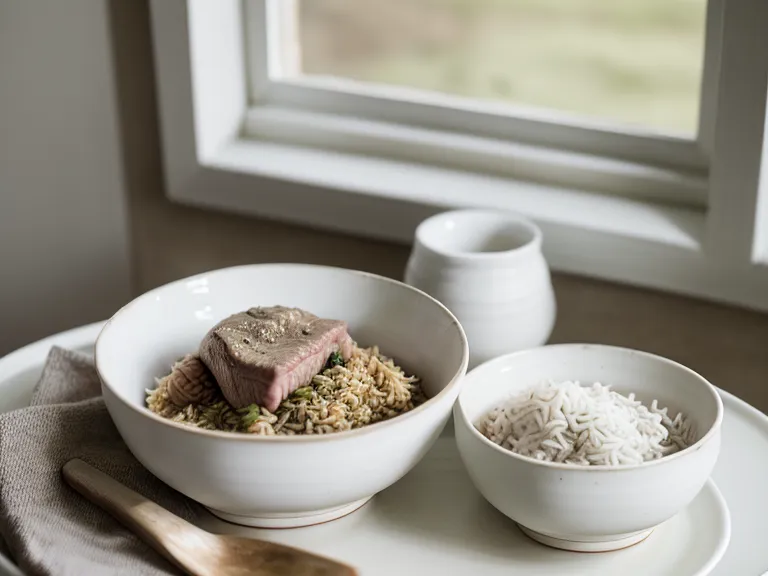
The transition was an exercise in patience. Banjo is a shepherd mix, so he’s generally a 'vacuum' when it comes to food, but Pickle, the beagle, was the real challenge. She watched longingly from the sidelines, her nose twitching at the scent of the lamb and rice mixture. I remember the cold, damp feeling of the fresh food pouch as I squeezed the mixture into Banjo's ceramic bowl for the first time. It didn’t look like the chunky, vegetable-heavy 'human-grade' food we were used to; it was smoother, more uniform, and smelled distinctly of wholesome grains and high-quality fats.
I started with a 25/75 mix of his old food and the new renal formula. In my spreadsheet, I noted a slight change in stool quality—it became a bit softer for the first three days—but his energy stayed consistent. I was watching for any sign of that 'senior dog slump' where they just seem less interested in the world, but Banjo remained his usual, inquisitive self, waiting for his post-breakfast ear scratches.
The Turning Point: A Humid Morning in August
By early June, we were fully transitioned. I had mastered the art of the 'renal-safe treat' (mostly small pieces of apple or watermelon) and had largely replaced our high-protein training sessions with nose-work games that didn't require a constant stream of beef liver. The real test, however, was the follow-up bloodwork. I had been logging his weight every Sunday morning, and he was holding steady at 64 pounds—exactly where we wanted him.
One humid morning last August, we went back to the clinic for the recheck. I was prepared for the worst—that the diet wouldn't be enough and we'd see those numbers climb into Stage 2 territory. When the results came back, the vet sounded almost as relieved as I was. Banjo's SDMA hadn't budged further. It was still at 16 µg/dL, and his creatinine remained stable. The diet was holding the line.

Seeing those numbers stay flat was the ultimate validation of the research. It’s the same feeling you get when you finally find a workflow at work that actually sticks, or when you realize your how to read dog food ingredient lists for senior shepherd mixes research actually pays off in real-world health outcomes. It wasn't a 'cure,' but it was a management strategy that worked for his specific biology at this specific stage.
Reflections from the Kitchen Table
Looking back at my tracking notes, the peace of mind that comes from a stable senior dog is worth every minute spent squinting at phosphorus percentages. We often think of dog food as a set-it-and-forget-it subscription, like a streaming service we only notice when the price goes up. But for a dog with early kidney disease, that subscription is a daily medical intervention. It requires the same attention to detail you’d give your own health after a concerning checkup.
If you're sitting where I was last February, staring at a highlighted PDF, know that the early diagnosis is a gift of time. It gives you the chance to pivot before the damage becomes irreversible. Whether you choose a clinical fresh food like JustFoodForDogs or a different path, the key is the data. Watch the weight, track the energy, and don't be afraid to adjust the plan when the numbers tell you to. Banjo is currently napping at my feet, his breathing deep and steady, and for now, that’s the only data point that truly matters.